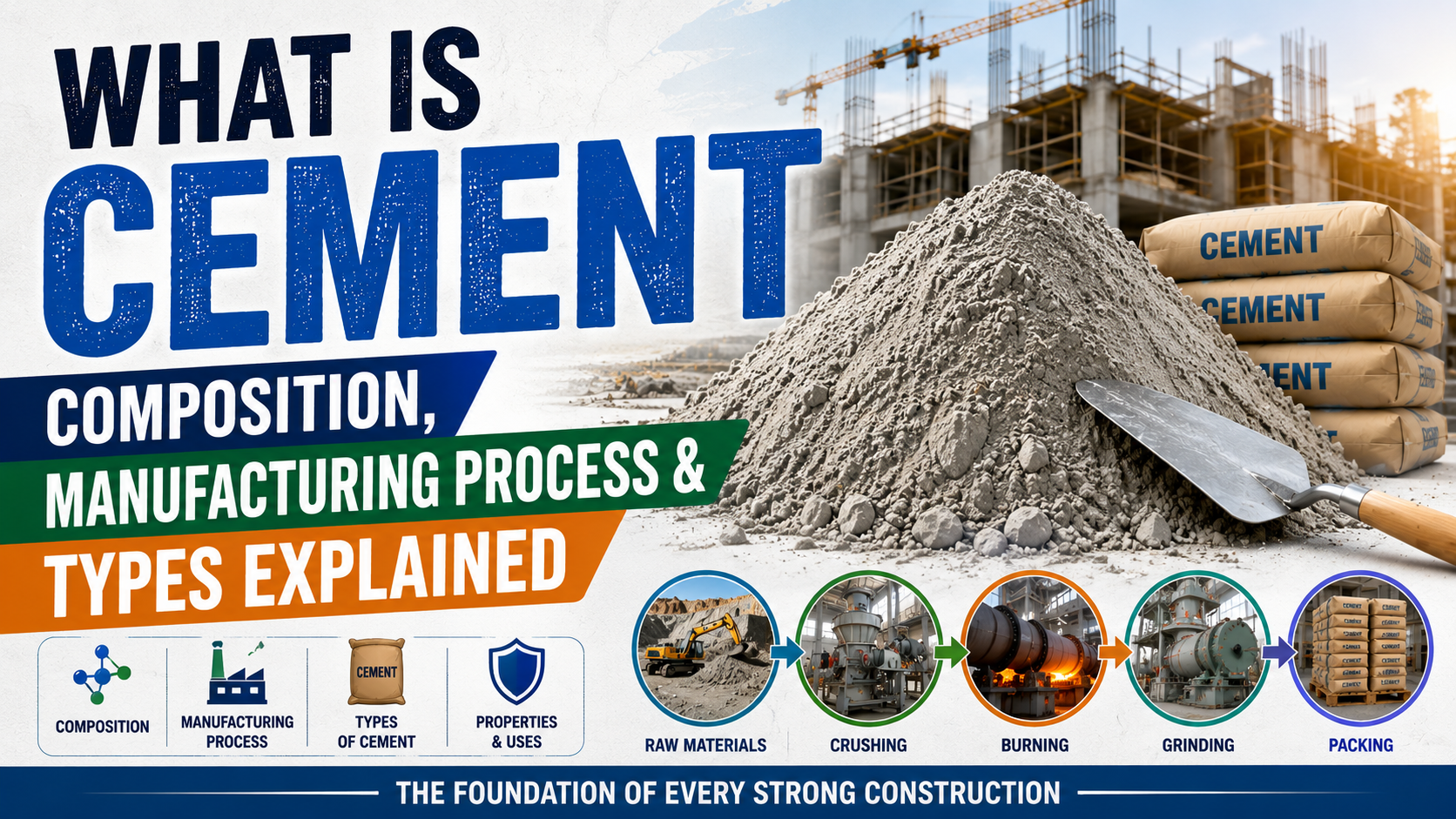
Portland cement is a key ingredient in construction, known for its
strength and versatility. Here, we’ll explore the raw materials used to make
it, their functions, and the impact of excess quantities.
 |
| Constituents of Portland Cement |
Key Oxides and Their Average
Percentages
- Lime (CaO): 63%
- Silica (SiO₂): 20.1%
- Alumina
(Al₂O₃): 6.1% - Iron Oxide
(Fe₂O₃): 3.1% - Magnesia (MgO): 2.1%
- Alkalis (Na₂O +
K₂O): 1% - Sulphur
Trioxide (SO₃): 1.5%
Functions and Effects of Key Oxides
|
Oxide |
Compound (%) |
Avg (%) |
Function |
Excess Quantity Effects |
|
Lime (CaO) |
60-65 |
63 |
Controls strength, |
Unsoundness |
|
Silica (SiO₂) |
17-25 |
20.1 |
Contributes to |
Causes slow |
|
Alumina (Al₂O₃) |
3-8 |
6.1 |
Helps in quick |
Lowers strength |
|
Iron Oxide (Fe₂O₃) |
0.5-6 |
3.1 |
Provides color and |
Causes same issues |
|
Magnesia (MgO) |
0.5-4 |
2.1 |
Imparts color and |
Leads to cracks |
|
Alkalis (Na₂O + |
0.5-1 |
1 |
Leaves residues. |
Causes |
|
Sulphur Trioxide |
1-2 |
1.5 |
– |
Makes cement |
Conclusion
- Strength &
Responsibility: Lime, Silica - Quick Setting: Alumina
- Hardness: Iron Oxide,
Magnesia - Residues: Alkalis,
Sulphur Trioxide