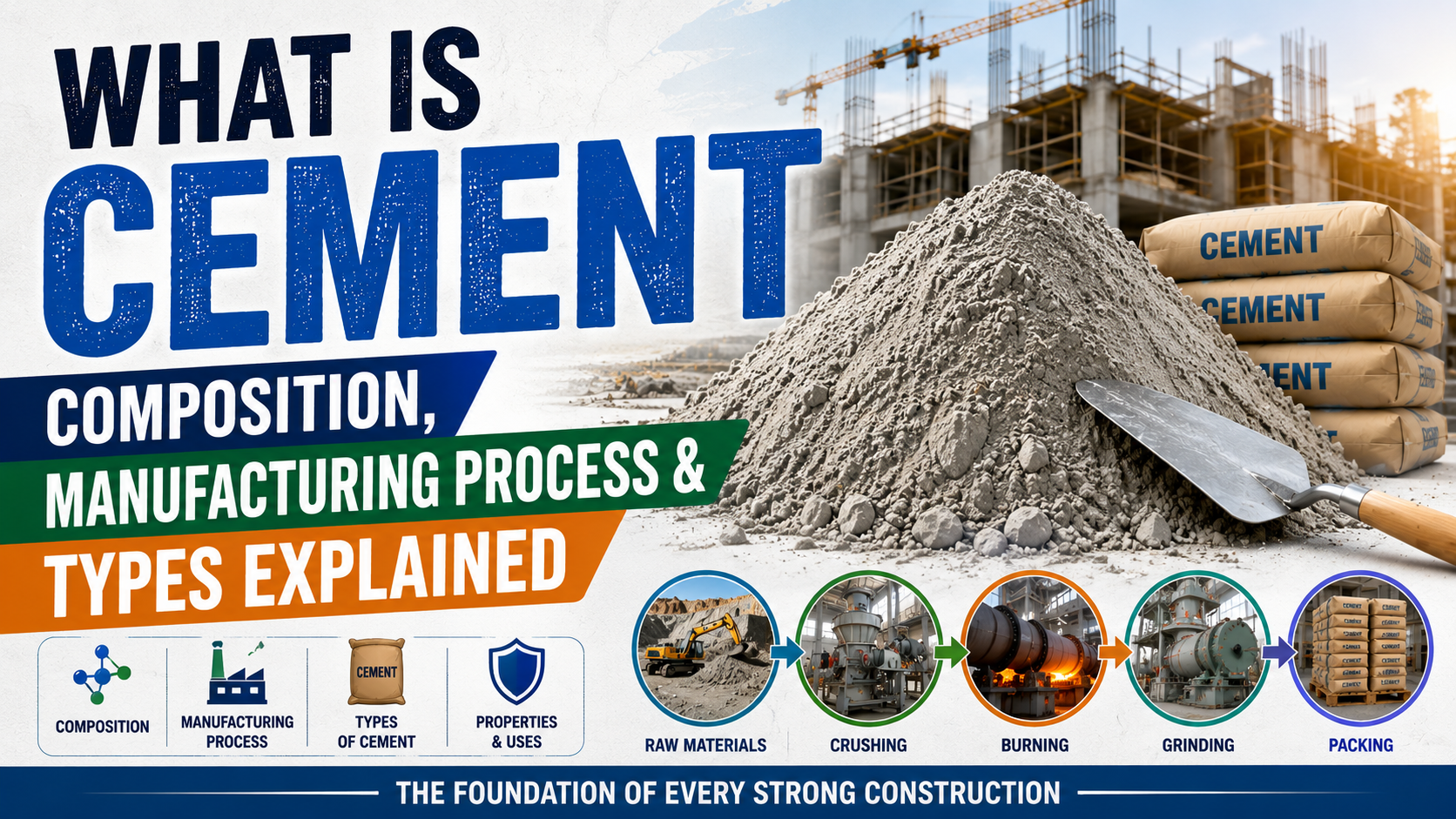
Bogue’s compounds are essential components in the chemistry of cement.
Understanding these compounds, their composition, and properties is crucial for
anyone involved in construction and materials science. This post will delve
into the four primary Bogue’s compounds, providing detailed information on
each.
 |
| Bogue’s Compounds in Cement Composition, Properties, and Applications |
Table: Bogue’s Compounds in Cement
|
Name |
Symbol |
Nickname |
Avg % |
Composition (%) |
Properties |
|
Tri-Calcium |
C3S |
Alite |
40 |
20-50 |
– Best cementing |
|
Di-Calcium |
C2S |
Belite |
32 |
25-40 |
– Late |
|
Tri-Calcium |
C3A |
Celite |
10 |
8-12 |
– Flash |
|
Tetra-Calcium |
C4AF |
Felite |
8 |
6-10 |
– Poorest |
Detailed Description of Each Compound
- Tri-Calcium
Silicate (C3S) – Alite: - Average
Percentage: 40% - Composition: 20-50%
- Properties:
- Best
cementing material - Provides
early strength - Resistant to
freezing and thawing - Commonly used
in road construction and prefabrication work - Di-Calcium
Silicate (C2S) – Belite: - Average
Percentage: 32% - Composition: 25-40%
- Properties:
- Provides late
strength (ultimate strength) - Resistant to
chemical attack - Used in the
construction of dams and bridges - Tri-Calcium
Aluminate (C3A) – Celite: - Average
Percentage: 10% - Composition: 8-12%
- Properties:
- Causes flash
set (quick setting) - Most
responsible for initial setting time - Resistant to
sulphate attack - Tetra-Calcium
Alumino Ferrite (C4AF) – Felite: - Average
Percentage: 8% - Composition: 6-10%
- Properties:
- Poorest
cementing material - Responsible
for flash set but generates less heat
Conclusion
Understanding the composition and properties of Bogue’s compounds is
essential for optimizing the use of cement in various construction
applications. Each compound contributes uniquely to the performance of cement,
influencing factors such as strength, setting time, and resistance to
environmental conditions.
By familiarizing yourself with these compounds, you can make informed
decisions in selecting and using cement for your construction projects.