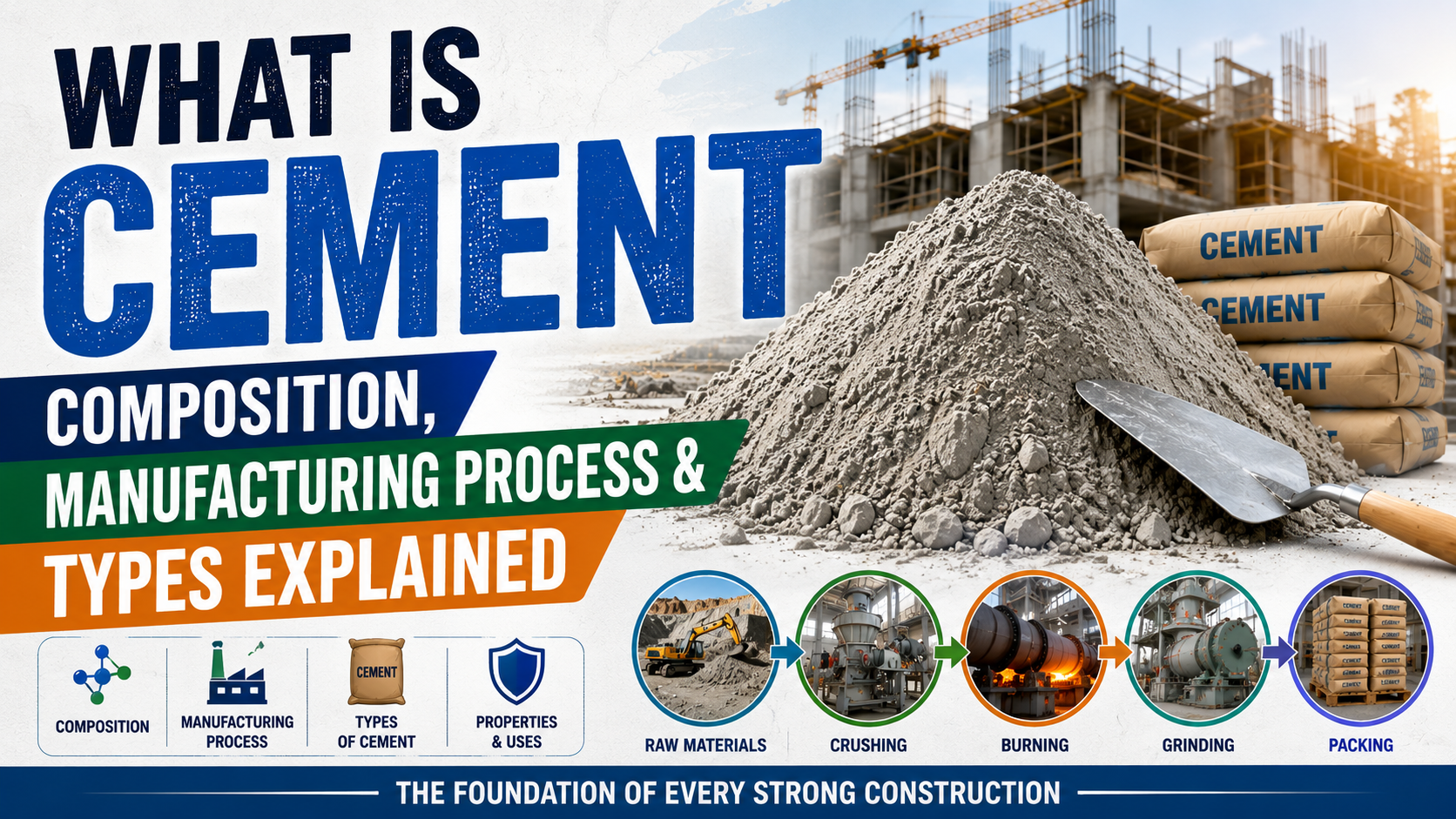
Stone processing is a crucial aspect of construction and masonry.
Understanding the various processes involved in handling and preparing stone
can significantly impact the quality and durability of construction projects.
This guide will walk you through the essential processes associated with stone,
including quarrying, dressing, crushing, seasoning, and stone pitching.
Additionally, we will explore the differences between rubble masonry and ashlar
masonry.
 |
| Stone Processing and Masonry Techniques |
Processes Associated with Stones
- Quarrying
- Definition: Quarrying is
the process of extracting natural stone from rock. - Importance: This is the
first step in obtaining raw materials for construction and masonry. - Dressing
- Definition: Dressing is
the process of giving a stone proper size, shape, and finish to the
roughly broken stones as obtained from the quarry. - Importance: Proper
dressing ensures that stones fit well in construction, providing
stability and aesthetic appeal. - Crushing
- Definition: Crushing is
the process of obtaining construction aggregate produced by mining a
suitable rock deposit and breaking the removed rock down to the desired
size using crushers. - Importance: This process
is essential for creating materials that can be used in various
construction applications. - Seasoning
- Definition: Seasoning
involves the drying of stone from the quarry sap, as freshly quarried
stones have moisture. - Importance: Proper
seasoning prevents future issues related to moisture, such as cracking
and weakening of the stone. - Stone Pitching
- Definition: Stone
pitching involves the interlocking of large stones and the placement of
stones on sloped ground. - Usage: It is used
for erosion protection of sloped areas.
Types of Stone Masonry
Stone masonry can be broadly classified into two types: Rubble Masonry
and Ashlar Masonry.
|
Type of Stone Masonry |
Characteristics |
|
Rubble Masonry |
– Uses irregular |
|
Ashlar Masonry |
– Uses smooth |
Conclusion
Understanding these processes and types of stone masonry is essential for
anyone involved in construction and masonry. Proper handling and preparation of
stone ensure the longevity and stability of structures.
Frequently Asked Questions (FAQs)
- What is
quarrying in stone processing? - Answer: Quarrying is
the process of extracting natural stone from rock, which is the first
step in obtaining raw materials for construction and masonry. - Why is dressing
important in stone processing? - Answer: Dressing is
important because it gives the stone proper size, shape, and finish,
ensuring that stones fit well in construction, providing stability and
aesthetic appeal. - What is the
purpose of crushing in stone processing? - Answer: Crushing is
done to obtain construction aggregate by breaking down the removed rock
to the desired size using crushers, which is essential for creating
materials used in various construction applications. - What does
seasoning involve in stone processing? - Answer: Seasoning
involves the drying of stone from the quarry sap to remove moisture,
preventing future issues such as cracking and weakening of the stone. - What is stone
pitching used for? - Answer: Stone
pitching is used for the interlocking of large stones and the placement
of stones on sloped ground, primarily for erosion protection of sloped
areas.