Retaining Wall Introduction
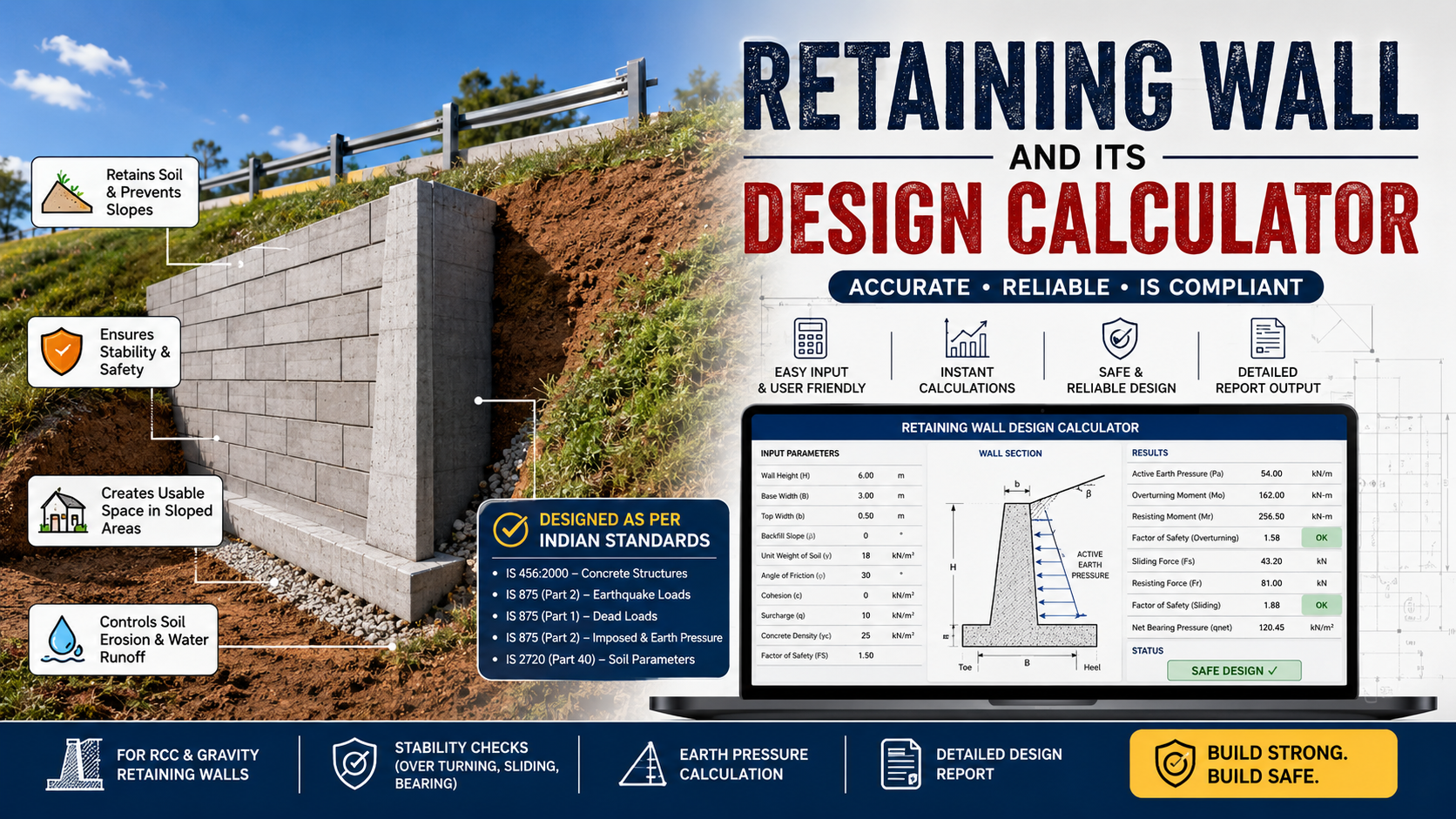
Retaining Wall is a crucial structural element to retain the earthwork in the construction or we can also say that to retain the lateral pressure of soil and retain it on different height on the two sides. Retaining wall can be use during various construction activities, such as highway construction, hilly area construction to retain the slippages of soil and many more.
Retaining Wall Uses
Retains soil where there is a change in ground level.
Prevents soil erosion and sliding.
Creates usable space on sloping land.
Supports structures, roads, bridges and warehouses.
Controls earth movement and maintains stability.
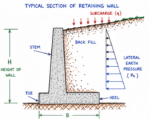
Typical Section of Retaining wall
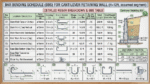
Bar Bending Schedule of Retaining wall
Where we use Retaining Wall ?
Along roads and highways
Basements and building foundations
Terraced agriculture and landscaping
Near water bodies, canals and embankments
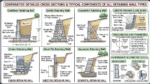
Types of Retaining Wall
Cantilever Wall
Gravity wall
Counterfort wall
Sheet pile wall
Gabion Wall
Advantages of Retaining Wall
Strong and durable structure
Helps in utilizing sloping land effectively
Prevents soil erosion and land sliding
Provides safety and stability to nearby structures
What are the Stability Check ?
Overturning Stability
Sliding Stability
Bearing Capacity
Overall Stability
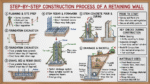
Step by Step Construction Process of Retaining wall